

What we do
How the agreement works
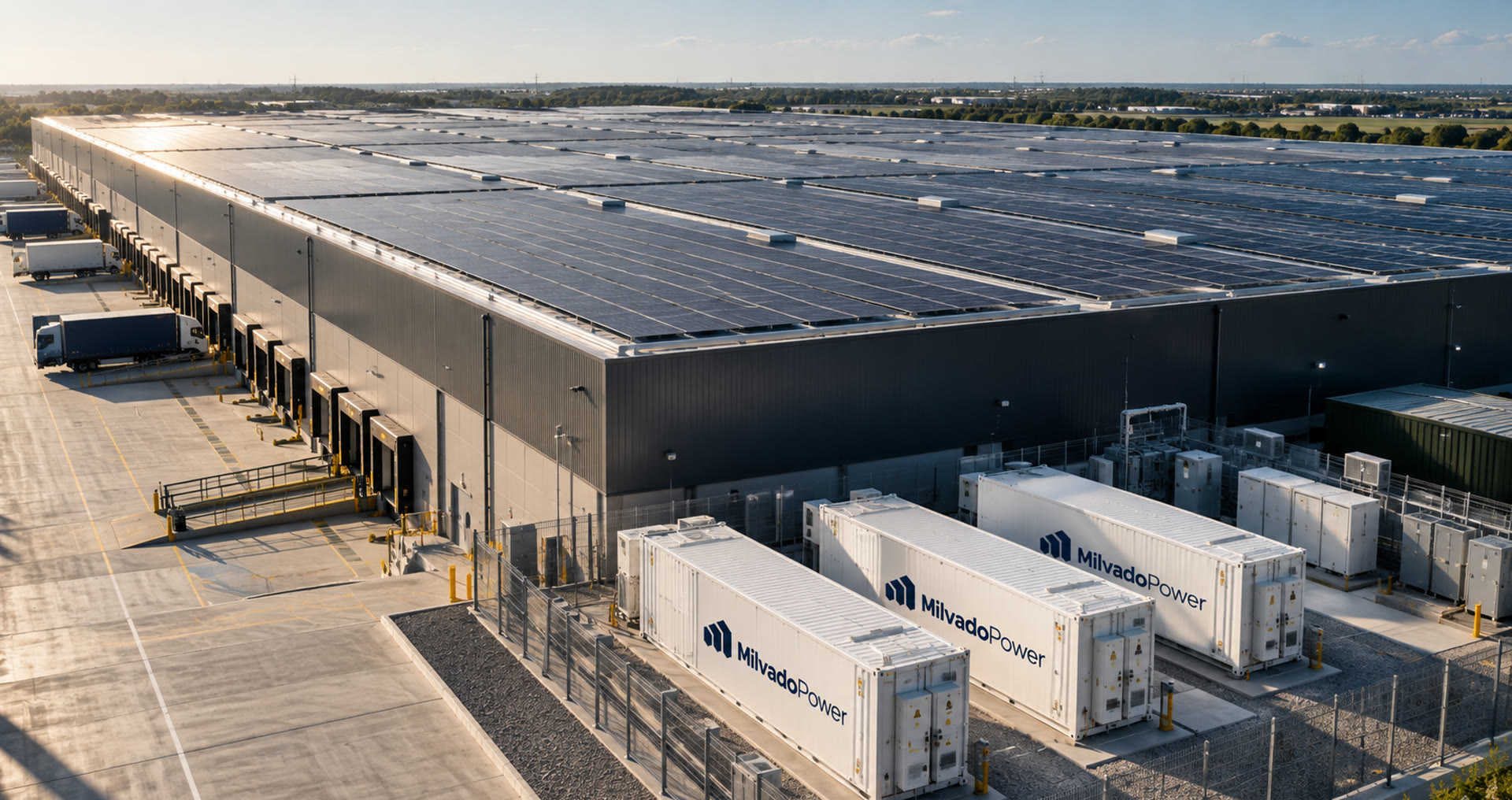
We find buildings where on-site solar and storage make sense, design the system around how the site uses power, arrange the funding and manage the asset for its whole life. You sign one agreement and pay for what the system delivers.
Solar
Solar power purchase agreement
MilvadoPower owns, operates and maintains the solar array for the full term, at no cost to you. You agree to buy the electricity it generates at a fixed price per kWh.
- Price. Agreed before anything is built and set against your actual tariff, not a market average.
- Indexation. The price rises once a year with inflation, so you know the rate in every year of the term.
- Metering. A dedicated generation meter records every unit. You are billed monthly for what it measures.
- Term. Typically 15 years. At the end you can buy the system at fair market value, extend the agreement, or have it removed.
Because the system is sized so that your building uses everything it makes, you pay for power you would otherwise have bought from the grid at a higher, less predictable price.
Storage
Battery energy services agreement
Grid charges are highest in the evening peak, the red band, when solar output has fallen away. A battery stores midday solar and cheap overnight power and releases it into that peak.
MilvadoPower owns and operates the battery under an energy services agreement. You pay for an agreed reduction in your peak costs, not for the equipment. Outside the hours it serves your site, we may use the battery to support the grid, which lowers the price we can offer you.
A battery can also help where your grid connection is close to its limit, for example if you plan to add electric vehicle charging, by covering short peaks instead of paying for a larger connection.
Grid connection
Zero-export connection
Our systems are designed under the G100 export limitation standard so that they never send power back to the grid. That has three effects you will notice.
- Approval from the local network operator is usually simpler and quicker than for an exporting system.
- Your saving does not depend on export prices, which are low and uncertain.
- The system is sized to your demand, so you are never paying for capacity you can’t use.
Who does what
Responsibilities over the term
MilvadoPower
- Site assessment and design
- Owning each system through a site SPV
- Arranging funding for each project
- Your agreement and monthly billing
- Operating and maintaining the system for the full term
Our delivery partner
- Installation by an established UK solar contractor
- Grid application and commissioning
- Planned maintenance and repairs
You
- Access to the roof and plant room
- Twelve months of bills and meter data
- Paying monthly for the power delivered
Questions
Frequently asked questions
Will this definitely be cheaper than my current supply?
We won’t say so until we have your tariff and half-hourly data. We then show the forecast saving in writing, against your actual contract. If the unit rate doesn’t beat what you pay, we will tell you and stop there.
Like any long-term price, it is a forecast. If grid prices fell sharply, the gap would narrow. If network and policy charges keep rising as they have, it widens.
Do I pay anything up front?
No. MilvadoPower pays for the design, equipment and installation through the site’s SPV. You pay only the monthly charge for the power and the battery service.
Who owns the system?
MilvadoPower. Each site sits in its own special purpose vehicle (SPV), a project company set up for that site alone and funded by MilvadoPower with its investment partners. The SPV owns the equipment and holds your agreement, so your project is ring-fenced from every other site. We operate and maintain it for the whole term and are your only point of contact.
What do I pay if the system produces less than forecast?
You pay for what the meter records. If the system produces less, you buy less from us and more from your supplier. Yield risk sits with the project, not with you.
Is there a minimum commitment?
Agreements usually include a minimum annual purchase, set well below expected output, so that investors can fund the project. We show you this figure before you sign.
What happens if we sell the building or our lease ends?
The agreement is written to pass to a buyer or the next occupier, with the building owner’s consent agreed before installation. If a transfer isn’t possible, the agreement sets out a buy-out price. We cover this in detail before you sign anything.
Will our power supply still be reliable?
Yes. The building stays connected to the grid. Solar and battery power is used first and the grid supplies the rest automatically.
Can we buy the system outright instead?
Yes. If you would rather own the system with your own capital, we can arrange that through our installation partner. We can provide a comparison of both options.
Request a site assessment
Send twelve months of bills and we will screen your site at no cost.